
/cpanel/login to start the setup wizard. The wizard collects your store’s basic information, address, and social links, then creates your first inventory location and default sales channel.
Settings Model
Store configuration is managed through key-value pairs in theShopper\Core\Models\Setting model. Each setting has a unique key, an optional display name, and a JSON value.
Database Schema
Retrieving Settings
By default, to retrieve the value of a key you can use the helper functionshopper_setting() passing the desired key as parameter
shopper-setting-{$key} by default, but if you want to retrieve each time the latest value you pass the second param withCache to false
Store
When you launch your store the first important thing to do is to fill in the information about this store. Your customers and the different services you might use need to know the information about your store.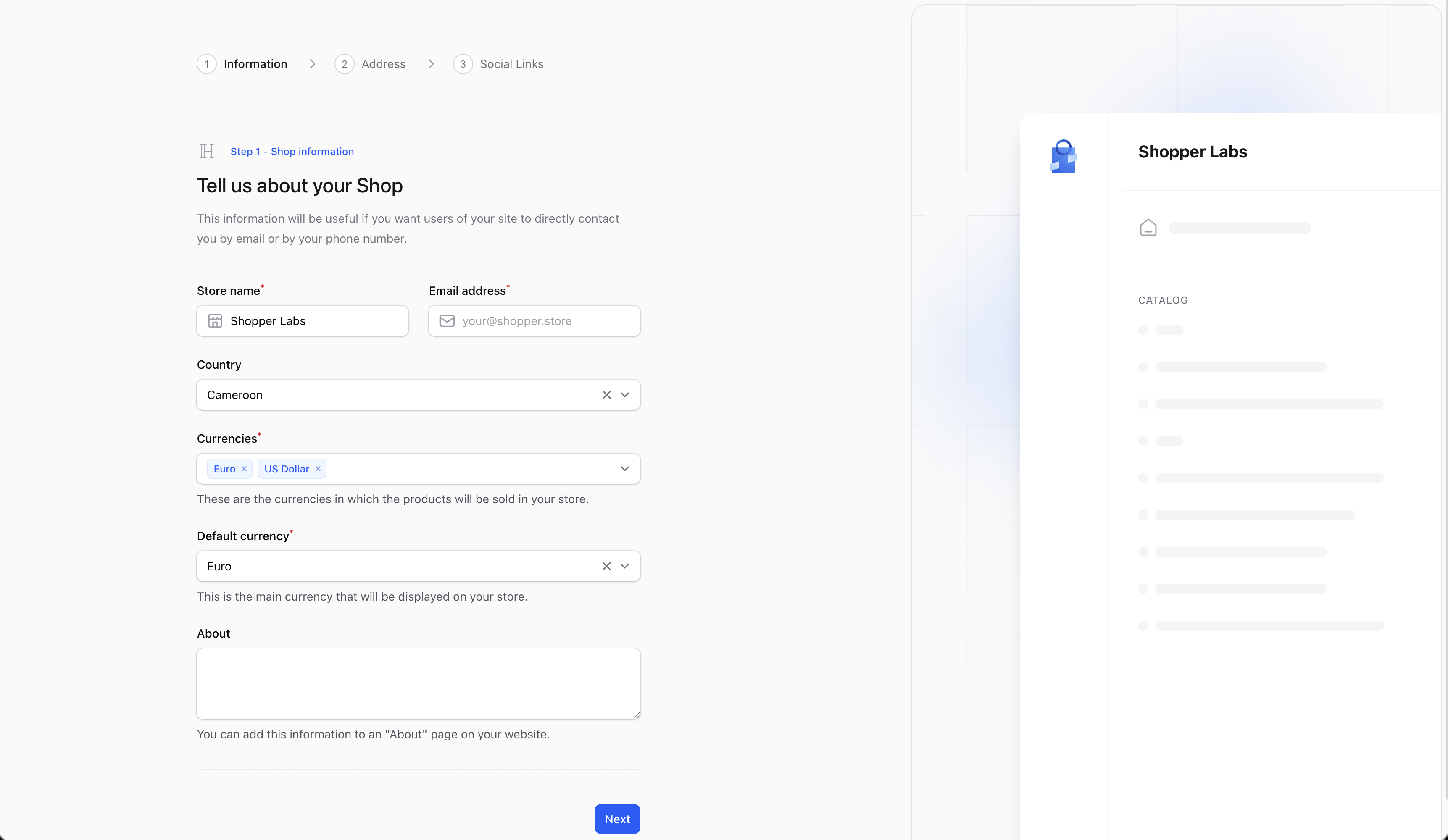
namethe store name,emailthe store emailcurrenciesarray ids for the store currenciesdefault_currency_iddefault currency id of the storecountry_iddefault country location of the store.aboutdescription and information about your store
Address
Most stores keep their products in different locations around the world. When setting up this configuration you need to define an address that will be set as the default location for your products. When shipping an order, the products to be delivered/shipped will start from this location and thus the shipping price can be set according to this.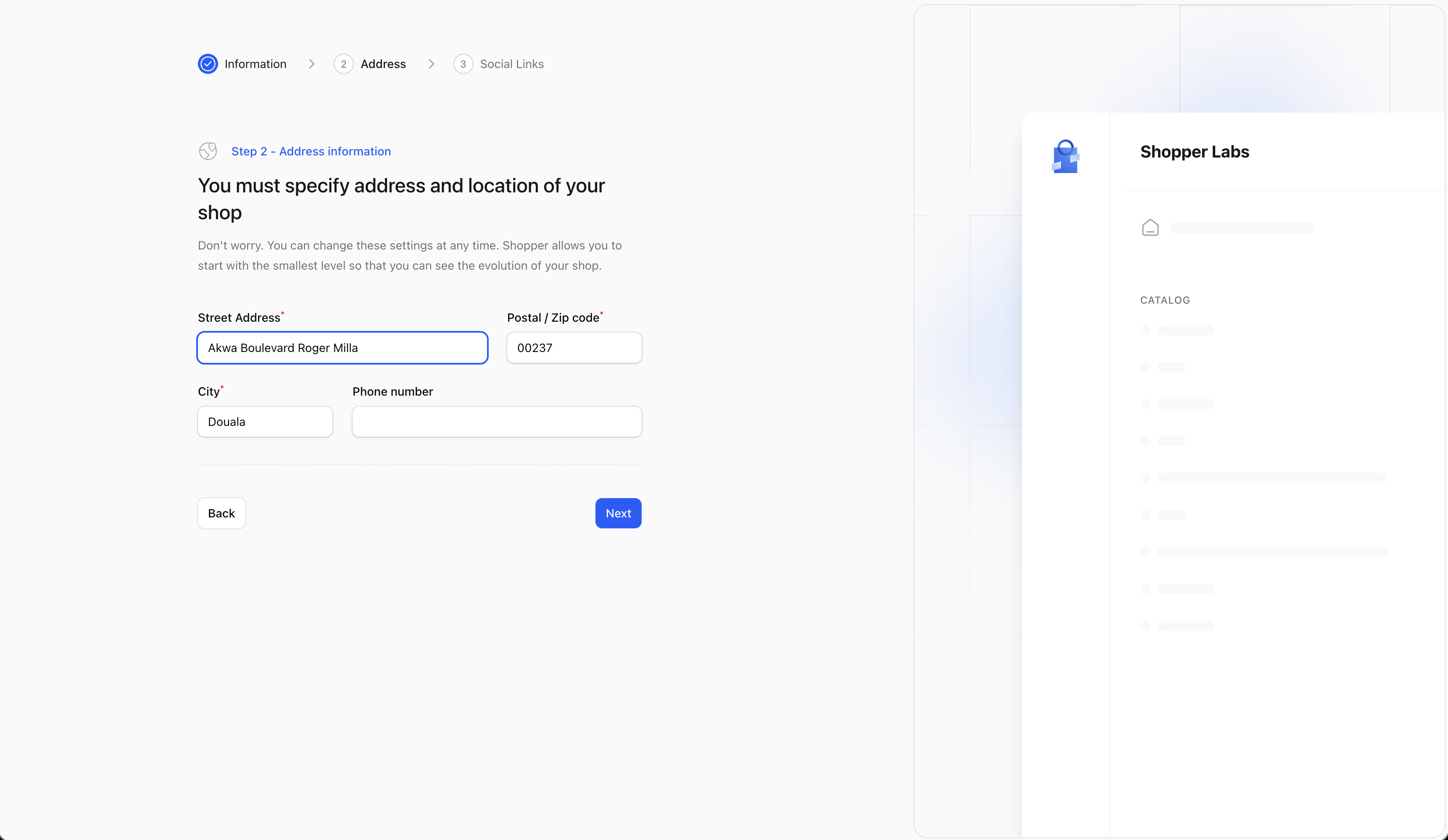
street_address, postal_code, city, phone_number
Social Links
If you want your customers to find you easily on social networks, you can fill in all the links directly by putting the full url. This step is completely optional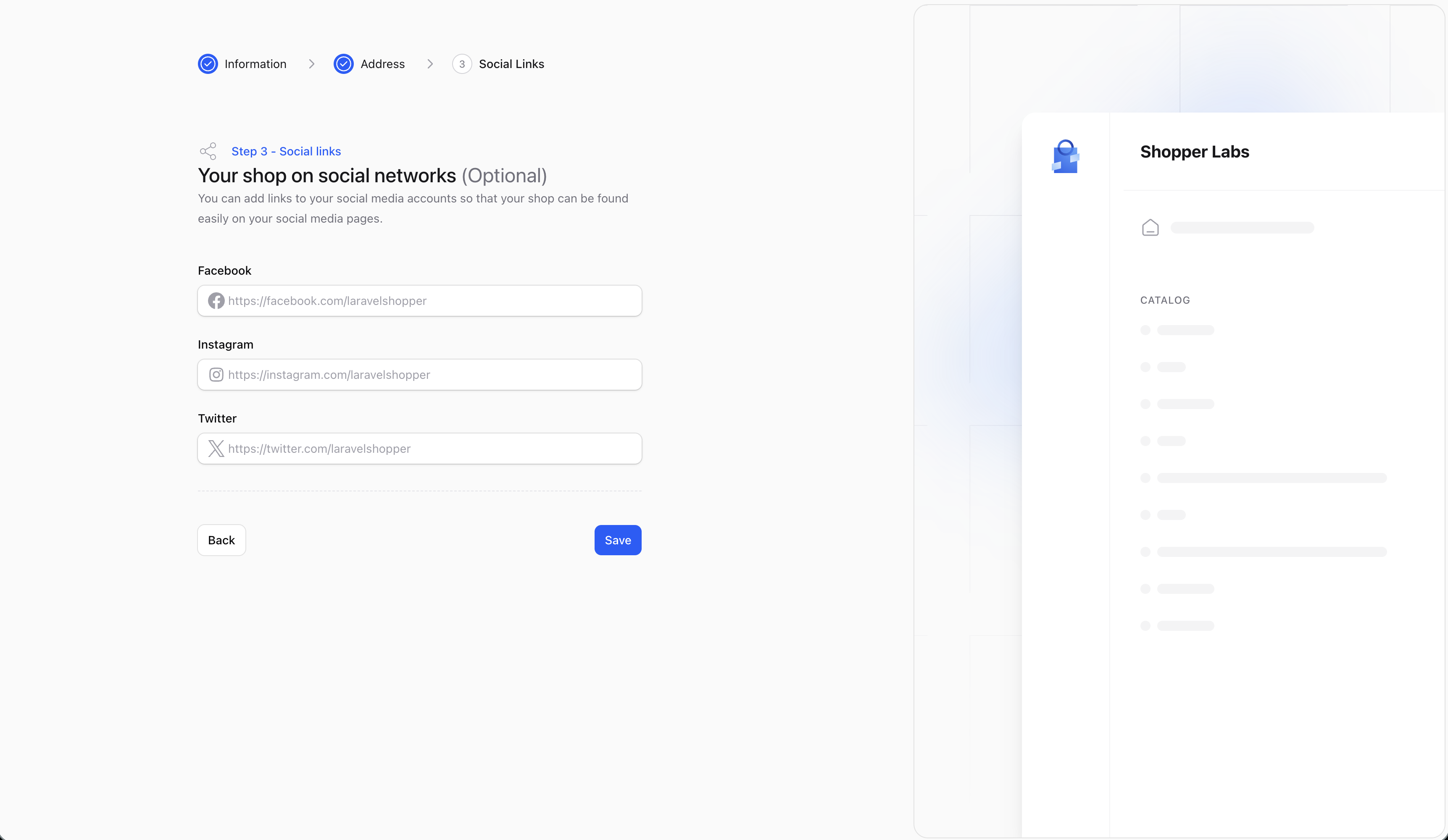
facebook_link, instagram_link and twitter_link.
The Livewire components used during the setup wizard are part of Shopper core and are not customizable. This is a mandatory step before accessing the dashboard.
Channel
In today’s E-commerce the shop site is no longer the only point of sale. Channels represent a single sales channel, which can be one of the following things:- Website
- Mobile application
- Cashier in your physical store
- Facebook shop,
- Instagram shop,
- etc
Update setting
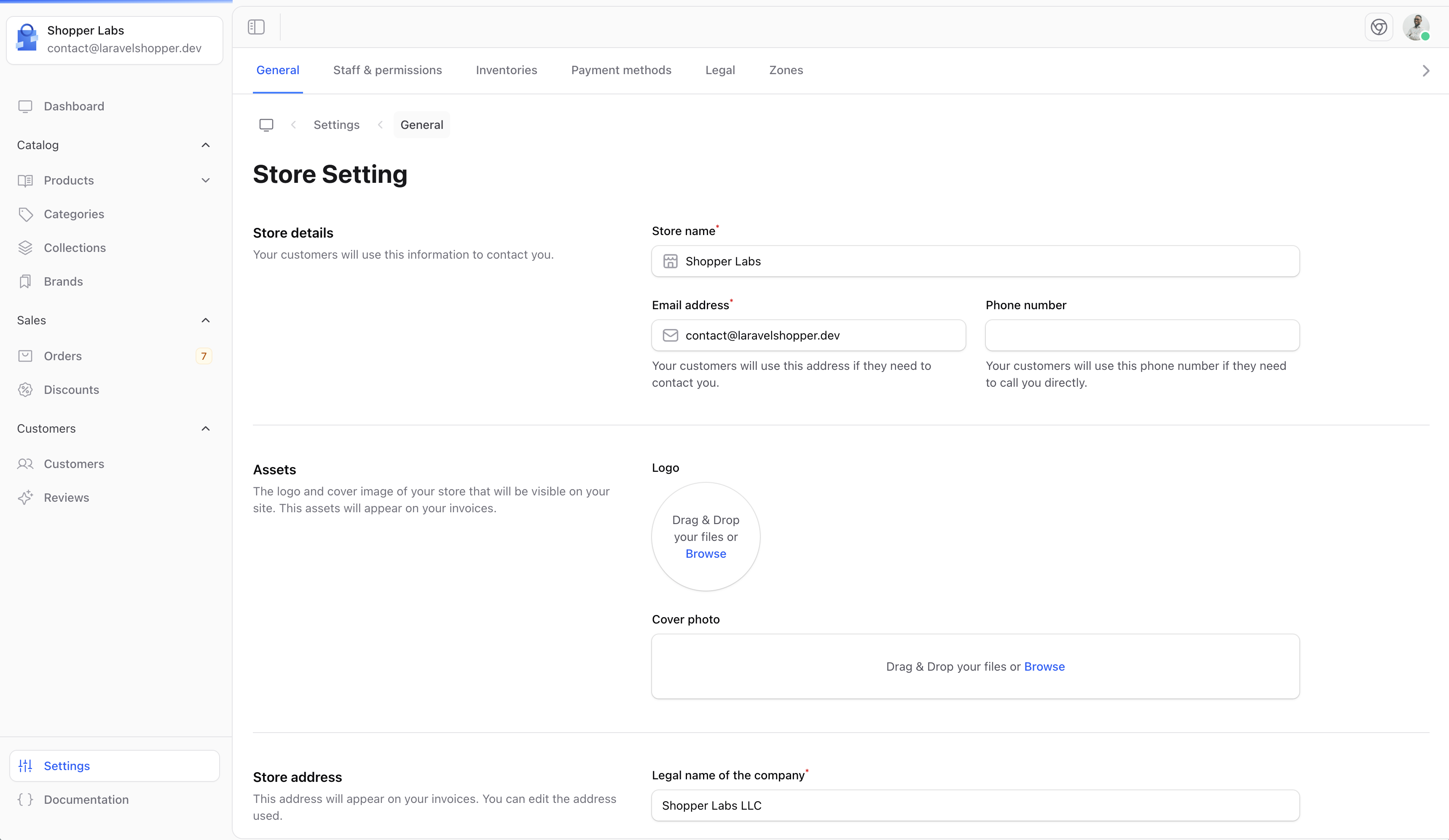
You can update your store information when needed, edit your store images, update the complete address, the legal name of your shop, etc. To edit your shop information:- From your administration, on the sidebar click on the settings icon at the bottom of the page Settings > General
config/shopper/components/setting.php if published,
It’s the Shopper\Livewire\Pages\Settings\General component under the key pages.general.
Shopper\Core\Models\Setting.
With the Shopper configuration you can completely change the architecture of this view and the data stored in the database.